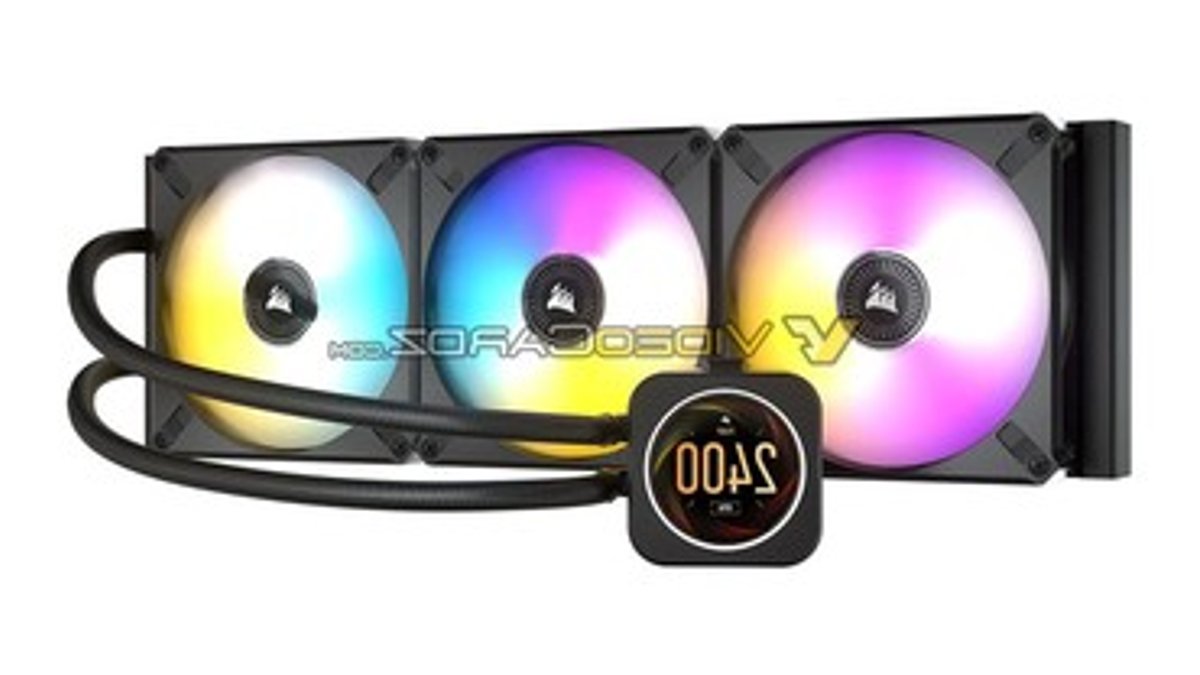
Corsair is preparing a new line of all‑in‑one (AiO) liquid coolers that target Intel’s upcoming Alder Lake desktop processors, according to images posted by a tech‑focused site. The leaked visuals show the coolers mounted on an Asus Prime Z690 motherboard alongside Vengeance DDR5 memory, confirming support for the LLG1700 socket.
Design details and LCD panel
The most noticeable change is a circular LCD panel built into the pump‑block. The display can be customized to show a range of system metrics, including fan speed, CPU temperature, and coolant temperature. Promotional pictures reveal the screen’s shape and suggest a clean interface that users can adjust via the company’s software suite.
Beyond the LCD, the leak includes photographs of the radiator and fan assemblies. Both dual‑fan and triple‑fan configurations appear, though it is unclear whether the fans are new aRGB models or existing ones refreshed for the new line. The images show the block from multiple angles, giving a sense of the overall aesthetic that blends the LCD with Corsair’s signature lighting.
Compatibility and retrofit options
All of the showcased coolers are designed for the LGA1700 socket, which powers the Alder Lake CPUs. The firm also announced an LGA1700 Retrofit Kit that will allow owners of earlier AiO models to adapt their existing hardware to the new platform. The kit works with the Elite Capellix series, RGB PRO XT line, H100x and other models.
The retrofit kit costs $2.99 (or €2.99/£1.99) with free shipping in the United States and Europe. A full mounting kit, intended for a fresh installation rather than a simple upgrade, is priced at $14.99. These prices suggest the company aims to make the transition affordable for enthusiasts who have already invested in Corsair cooling solutions.
Related: MonsterLabo updates its Beast computer case
For users planning to build a new system around Alder Lake, the forthcoming AiO coolers could simplify the cooling setup. The integrated LCD removes the need for separate monitoring tools, while compatibility with DDR5 memory and modern motherboards aligns with current high‑performance builds.
In practice, the LCD’s ability to display real‑time data could help builders fine‑tune fan curves and temperature thresholds without third‑party software. This convenience may be especially valuable for overclockers who rely on precise thermal feedback. However, the actual responsiveness of the screen and its impact on overall system performance remain to be seen once the products launch.
The leak does not reveal pricing for the coolers themselves, nor does it confirm whether the LCD panel will be standard across all models or reserved for a premium tier. As the launch date approaches, more details are likely to emerge from official channels.
Overall, the new lineup appears poised to meet both visual and functional expectations of modern builders.